Executive Summary
Treat generative AI and algorithmic amplification as systemic risks requiring a combined technical, regulatory, and civic response. Deploy detection and provenance tools, adopt the NIST AI RMF (NIST AI Risk Management Framework), require platform transparency and accountability, and invest urgently in public literacy, workforce transition programs, and democratic resilience. [1] [2]
Artificial intelligence is no longer a future concern — it is reshaping economies, information ecosystems, and labour markets right now. This page examines three converging threats: AI-generated misinformation and deepfakes, the erosion of institutional trust, and the accelerating displacement of human workers. Each risk is documented, evidence-based, and actionable.

What the Risk Landscape Looks Like
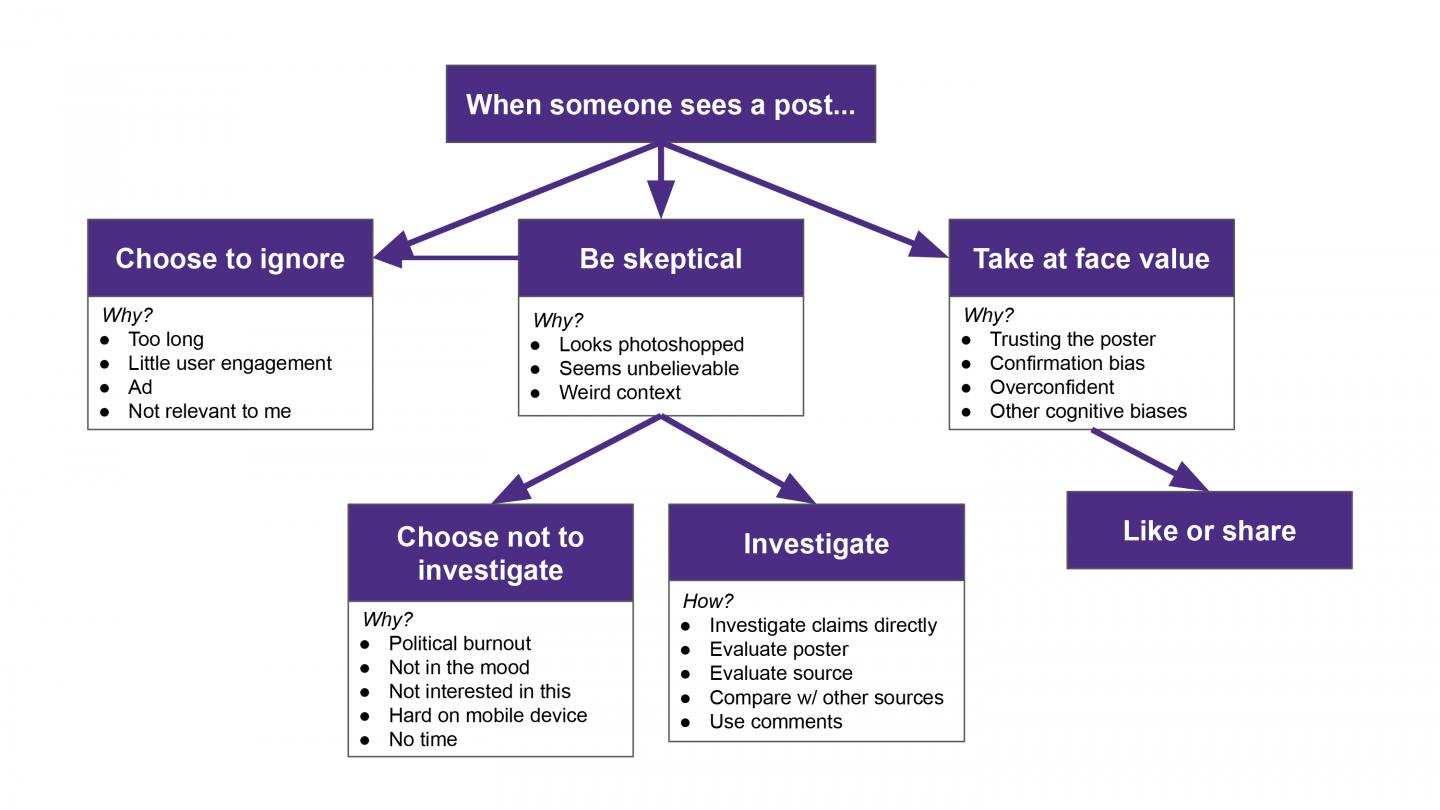
Generative AI can produce realistic text, images, audio, and video at scale. These capabilities increase the volume and plausibility of false or misleading content, raising systemic risks to information integrity, public trust, and democratic processes. [3]
The risks are not evenly distributed. States, corporations, and well-resourced actors benefit asymmetrically, leaving individuals, workers, and civic institutions disproportionately exposed.
| Risk Category | Mechanism | Current Severity |
|---|---|---|
| Synthetic Misinformation | AI-generated text, images, and video published at industrial scale | High |
| Deepfakes & Impersonation | Audio/video cloning of public figures to fabricate events or statements | High |
| Algorithmic Amplification | Engagement-optimised feeds preferentially surfacing false or polarising content | High |
| Job Displacement | AI automation eliminating white-collar and knowledge-worker roles at pace | High & Accelerating |
| Privacy & Data Leakage |
Models trained on personal data enabling targeted manipulation or re-identification.
🔒 Protect your data: Sovereign AI Guide → |
Medium–High |
| Trust Erosion ("Liar's Dividend") | Pervasive synthetic media degrades the epistemic foundation of all digital evidence | Medium–High |
⚠ AI Is Coming for Your Job
In 2026, major technology and telecommunications companies cited AI automation as a direct driver of significant layoffs. The pattern is consistent: AI systems now perform coding, customer service, data analysis, content moderation, and network management tasks that previously required tens of thousands of human employees.
Generative AI can produce high volumes of realistic output that previously required skilled professionals, enabling organisations to reduce headcount while maintaining or increasing output volume. [3] Algorithmic systems optimise for efficiency, not employment. [2]
2026 AI-Driven Layoffs — Selected Companies
| Company | Sector | AI Displacement Factor |
|---|---|---|
| Rogers Communications | Telecommunications (Canada) | Operational AI automation; network management and customer-support roles reduced |
| Microsoft | Technology (Global) | AI tooling replacing software development, support, and sales operations roles |
| Meta | Social Media / Technology (Global) | AI absorbing content moderation, ad operations, and engineering functions |
| Other major employers | Finance, Legal, Retail, Media | AI-assisted workflows reducing headcount across knowledge-worker and analyst roles |
2027 Outlook: Analysts and labour economists project AI-driven displacement will expand rapidly into accounting, legal services, journalism, healthcare administration, and government operations. Mid-level white-collar roles are the next wave. If your work involves repetitive analysis, drafting, scheduling, or data handling — your role is being evaluated for automation right now.
How AI Amplifies Misinformation and Harms

- Scale and speed: Automated generation enables high volumes of plausible content distributed in real time — far outpacing human fact-checking capacity. [3]
- Algorithmic amplification: Engagement-optimising recommendation algorithms preferentially surface sensational, polarising, or emotionally charged content, compounding the reach of false narratives regardless of accuracy. [2]
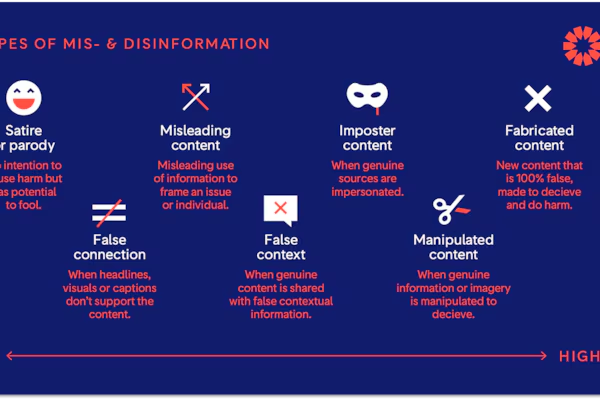
- Deepfakes and impersonation: Synthetic audio and video can clone the voice and likeness of public figures to fabricate statements, undermine evidence, and erode trust in authentic media — producing the "liar's dividend" where genuine footage can be credibly dismissed as fake. [3]
- Targeted manipulation: AI-driven micro-targeting leverages personal data to deliver customised disinformation to specific individuals or communities at moments of maximum susceptibility. [4]
- Privacy and data risks: Large models trained on personal data can leak sensitive information, enable re-identification, or power targeted manipulation campaigns at scale. [5]
- Trust collapse: Pervasive synthetic media degrades the epistemic foundation of digital evidence — making it easier to deny authentic footage and harder to establish shared facts in public discourse and legal proceedings. [3] [4]
Technical and Policy Safeguards
Technical Measures
- Provenance and watermarking: Embed robust provenance metadata (C2PA — Coalition for Content Provenance and Authenticity — standards) and cryptographic watermarks in synthetic media to enable automated detection and source verification. [4]
- Detection and monitoring: Deploy model-agnostic detectors, platform-level monitoring, and cross-platform signal sharing to identify coordinated inauthentic behaviour and synthetic content campaigns. [3]
- Access controls and rate limits: Require stronger authentication and enforce bulk-generation limits for high-risk model access to reduce misuse at scale. [1]
- Red-teaming and adversarial testing: Mandate structured adversarial evaluation of generative models before deployment to surface manipulation risks and failure modes. [1]
Policy and Governance Measures
- Risk management frameworks: Adopt and operationalise the NIST AI Risk Management Framework (AI RMF) across critical sectors — a structured standard for identifying, measuring, managing, and governing AI risks throughout the system lifecycle. [1]
- Platform accountability: Require algorithmic transparency reports, independent audits of recommendation systems, and enforceable redress mechanisms for users harmed by AI-amplified content. [2]
- Privacy and data protection: Strengthen data-use limits, consent standards,
and mandatory training-dataset disclosures to reduce privacy harms and close regulatory gaps in
generative AI. [5]
🔒 Practical guide: Sovereign AI & Data Protection → - Multi-stakeholder oversight: Establish independent oversight bodies including civil society, technical experts, labour representatives, and regulators to review high-risk AI deployments and workforce automation plans. [4]
Read the full Sovereign AI & Data Protection Guide →
Operational Checklist for Organisations
- Map all AI use cases and classify risk levels before deployment.
- Apply the NIST AI RMF or equivalent to all high-risk systems. [1]
- Require provenance metadata; test detection tools continuously. [4]
- Publish transparent workforce-impact assessments for all automation projects.
- Invest in employee AI literacy and maintain rapid-response teams. [3]
- Consult privacy counsel before training models on personal data. [5]
Concrete Recommendations for Governments and Organizations
- Mandate pre-deployment risk assessments: Require public summaries of risk assessments for any model capable of generating synthetic media or automating substantial human labour at scale. [1] [4]
- Enforce provenance and labeling standards: Legislate mandatory provenance metadata and visible labeling of AI-generated content on all major publishing and social platforms. [4]
- Regulate amplification mechanics: Require algorithmic transparency and independent auditing of recommendation systems that drive engagement and content reach. [2]
- Fund public detection research: Allocate public funding to robust, open-source detection tools, watermarking standards, and cross-platform coordination infrastructure. [3]
- Strengthen privacy and data-protection rules: Update legislation to cover generative AI training and require full documentation and consent frameworks for training datasets. [5]
- Invest in civic and workforce resilience: Scale media literacy programs, fund worker retraining and transition supports, and establish rapid-response teams for misinformation incidents. [2] [3]
- Require workforce-automation transparency: Companies deploying AI systems that displace workers should publicly disclose the scope, timeline, and affected roles — and provide transition support commensurate with the displacement caused.
Visual Aids
Sources & Assumptions
- NIST — NIST AI Risk Management Framework (AI RMF) and Generative AI Profile Guidance — National Institute of Standards and Technology, U.S. Department of Commerce.
- Frontiers — Policy review on AI-driven disinformation, algorithmic amplification, and multi-stakeholder recommendations — Frontiers in Artificial Intelligence, 2025.
- RAND — Generative AI threats to information integrity — synthetic content and information operations analysis — RAND Corporation.
- Springer — Systematic review of regulatory frameworks, multi-stakeholder governance, and trust in generative AI — AI & Society, Springer, 2025.
- OPC Canada — Privacy guidance for generative AI — transparency, consent, and data-protection mitigations — Office of the Privacy Commissioner of Canada.
Assumptions & Disclaimer: This page summarises current public research and policy guidance as of May 2026. Specific model capabilities and vendor practices vary; claims should be validated in procurement and deployment contexts. This is independent research — not legal, financial, or employment advice. The 2026 layoff data reflects publicly reported and disclosed information from the named companies.
More on ai.tedlee.ca
Further reading on AI risks, surveillance, cybersecurity, and defence.
How to run AI locally, store data under your own control, defend against surveillance, and use data-poisoning to protect your personal information from unauthorized AI training.
China's integrated AI camera networks vs. fragmented Western systems — and where Canada walks the tightrope between security and civil liberties.
Deepfakes, voice cloning, and AI-generated phishing — practical defences, with the 2025 CIRO breach as a real-world case study.
How phishing and AI-assisted social engineering compromised Canadian investor data — and how to protect your accounts.
From the fictional "Machine" in Person of Interest to China's real "Sharp Eyes" network — with 1984 parallels and governance questions.
Cost, sovereignty, Arctic capability, and Bombardier ties — why the Saab Gripen and GlobalEye AEW-C may serve Canada better than the F-35.